
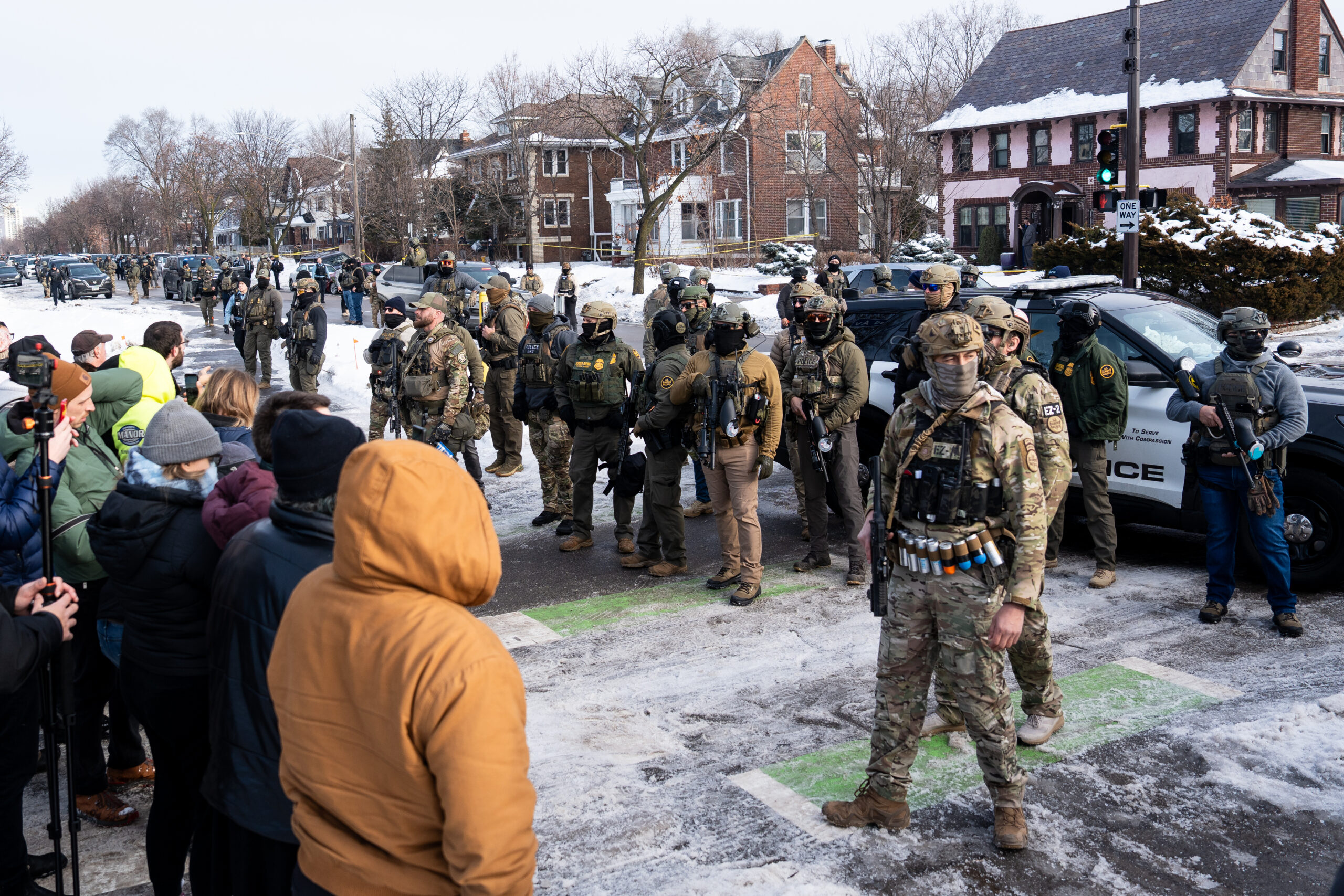
Over the past weeks, events in Minneapolis have drawn international attention even as the US administration exerts its power abroad. Immigration enforcement operations by ICE, widely criticised for their methods, have led to severe community disruption and political opposition, culminating in the tragic fatal shooting of a local resident.
Behind the headlines lies a deeper story – one that touches human rights, social cohesion and, increasingly, business reality.
In an open online conversation on 27 January, Enact’s Co-founder and CEO Mattias Iweborg, spoke with our close associate Roger Branigin, a human rights lawyer who combines decades of global experience in operational and political risk with a uniquely personal perspective. Roger lives in Minneapolis, less than 1.5 miles from the site of the fatal ICE shooting, and shared first-hand insights into how recent developments are unfolding on the ground.
Roger’s legal career spans nearly 20 years as a corporate litigator, including a lead role in complex litigation in the aftermath of 9/11. Since then, he has worked extensively on business and human rights, including assisting the late Professor John Ruggie in the development of the UN Guiding Principles on Business and Human Rights. He regularly collaborates with us on client engagements – and is now witnessing these developments unfold outside his own front door.
Topics explored during the session included:
• What is happening on the ground in Minneapolis – beyond media narratives
• The impact on Minneapolis’ varied migrant communities and the wider social fabric
• The broader situation for migrants and migrant workers in the US
• How these developments are being received by the business community, particularly in sectors highly dependent on migrant labour
• What this may signal for the months ahead – and what European businesses should be paying attention to now
While the primary purpose of the session was to raise awareness of the gravity of the current situation, the discussion also took a clear-eyed look at the implications for business, including exposure in supply chains and emerging legal, operational and reputational risks.
Key takeaways: What companies can do now
Regardless of whether they operate directly in the US or have supply chains and business relationships that extend into the US, companies can take concrete steps now:
- Develop a clear strategy grounded in your own value proposition and a considered assessment of human rights, ethical and reputational risk tolerance.
- Communicate that strategy clearly, ensuring managers and employees understand expectations and, as far as size, resources and leverage allow, that workers across the value chain have access to safe channels to provide feedback or report incidents if confronted with immigration enforcement actions.
- Define thresholds and escalation procedures, including who is responsible for responding if risks materialise and how issues should be handled internally.
- Act collectively where possible. Given the current administration’s transactional approach to policy, coordinated action through industry presence and commercial relationships can be more effective than isolated responses. A clear, united message is more likely to be heard, including from abroad.
Photo credit Chad Davis: chaddavis.photography/sets/ice-in-minneapolis/