
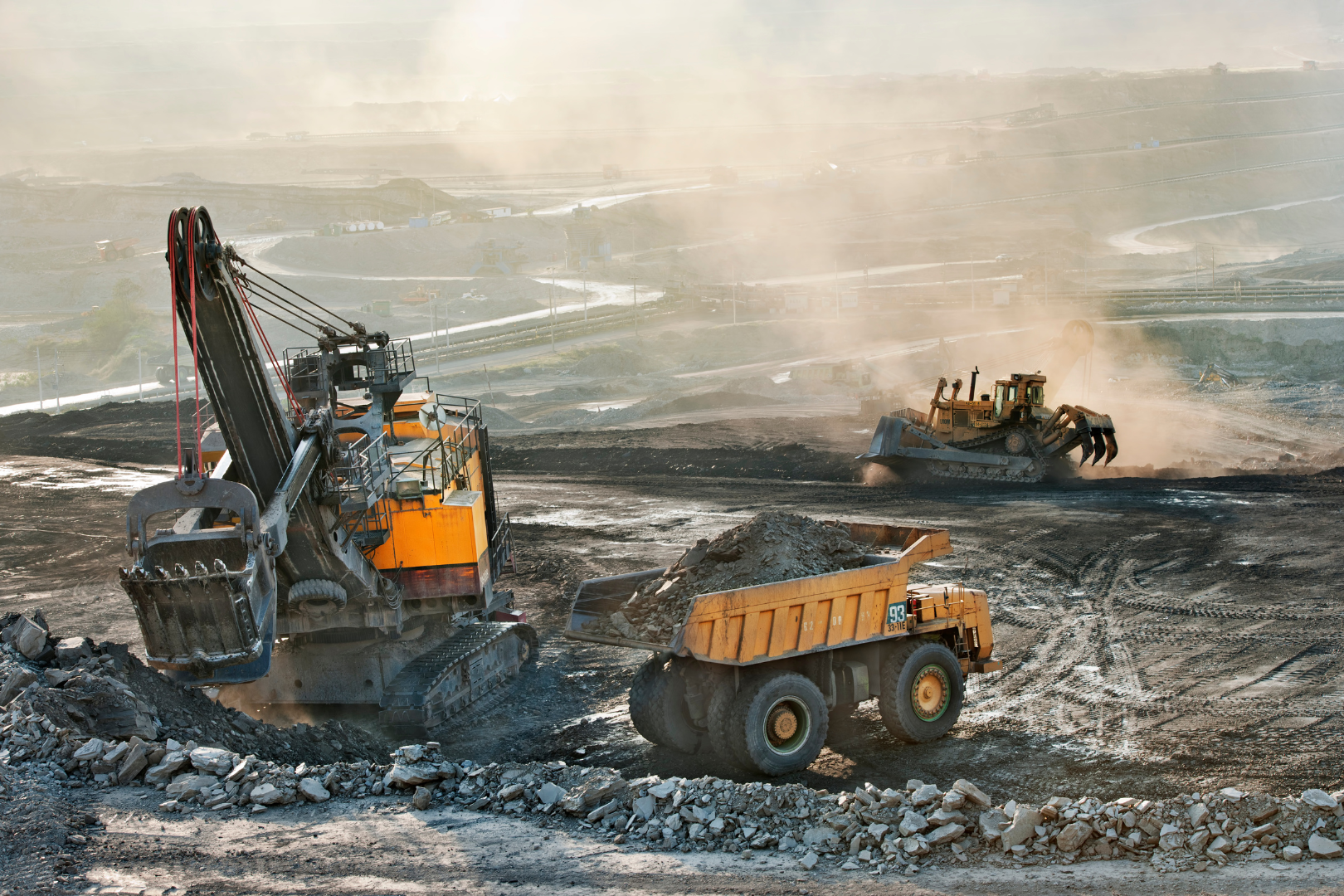
South Africa’s electrical power has historically been largely based on coal-fired power. Up to ten years ago, some 93% of electrical power was coal-fired, with 5% emanating from the country’s one nuclear power station and the remainder being diesel or small-scale hydro power.
That history is unsurprising given the country’s abundant coal resources whose mining has been a significant part of the country’s large mining sector for more than 150 years. But it has made South Africa, with its strong economic focus on mining and heavy industry, one of the world’s top 15 countries where CO₂ emissions are measured per US$ of economic output.
Today, coal generates less than 80%. Wind and solar power now generate about 8.5% and are growing fairly rapidly. But this trend, while positive for all the environmental reasons, raises serious socio-economic challenges in a country where the unemployment rate is extremely high, and coal mining and power stations sustain large regions economically and employ more than 140,000 people.
What drove the shift to renewables
Various factors have contributed to the national embrace of a transition to renewable energy. For one thing, South Africa is a committed signatory to the 2015 Paris Agreement, and has a number of vocal civil society organisations pressing for as rapid a transition as possible.
Secondly, and equally significantly, energy security became a serious challenge in the country. Power shortages arose initially in 2008 because of planning delays around building two new (coal-fired) power stations. Subsequently, corruption and mismanagement during the 2009**–**2017 presidency of Jacob Zuma left the capability of the state-owned electricity generator, Eskom, seriously damaged. It led to regular power outages for business and consumers. Outages came to an end only in mid-2025.
Renewable energy became a potent mitigating factor. And the bulk of this was initiated or contracted for with private sector solar and wind farm developers by the deep**-**level mining companies struggling with power outages. Government introduced tax rebates for private households installing solar panels. All of which has helped end the power outages. Eskom, with government backing, has scheduled the closure of the older coal power stations whose maintenance costs are high. Though closures have been delayed pending further renewables development in order to prevent a new era of power outages.
Most of the largest, far-sighted coal mining companies have added renewable energy generation to their portfolios. For example, the largest supplier of coal to Eskom, Seriti, now calls itself Seriti Power (no longer Seriti Coal) and has established a subsidiary, Seriti Green, that has a 4GW renewable power development portfolio in South Africa and East Africa.
Coal workers and mining towns
But the difficult policy issue for government, and for society as a whole – particularly the mining unions, community organisations and the coal companies – is: what about the 140,000 workers and mining towns whose future is threatened by the transition away from coal and towards renewables?
The mines minister, Gwede Mantashe, like President Cyril Ramaphosa a former general secretary of the National Union of Mineworkers, is known as a very reluctant proponent of any transition at all, given his past affiliation with those mineworkers and Eskom employees.
Still, the term “just energy transition” (JET) has been embraced by most interested parties. President Ramaphosa has appointed a Presidential Climate Commission whose purpose is “to oversee and facilitate a just and equitable transition towards a low-emissions and climate-resilient economy”. The commissioners are described as having diverse experience in climate change, environmental policy, sustainable development, economic development, energy and social justice.
Renewables in the coalfields
Eskom and its suppliers, too, are devoting resources to addressing the challenges. For example, Seriti Green deliberately located its largest facility, the 900MW Ummbila Emoyeni renewable energy facility, in the Mpumalanga province in the midst of the province’s coal fields, with the intention of being there to provide alternative economic activity when the mines cease operating.
The company’s CEO Peter Venn, in an article in Business Day newspaper earlier this year, The just energy transition in action, wrote that the company has an obligation to the surrounding communities. “It gives us the opportunity to be at the centre of the JET. It also increases the pressure on us to ensure we do it as well as we can”. And he spells out how they are trying to achieve that.
No simple solutions
But there are no simple solutions. Once constructed, no renewables facility will offer the large-scale employment that an operating coal mine does. There are hopes that the power being produced will be able to be used to power AI data centres in the coal-mining provinces and that they will be operated by former coalminers.
It is generally accepted and understood that decarbonisation is essential. And that the economic sacrifices it will lead to can only be partly mitigated by just transition planning.
By Alan Fine
In his work first at gold mining company AngloGold Ashanti, and then as a consultant to the mining industry, Alan Fine has worked, among other things, with companies on implementing the UNGPs and with the Minerals Council South Africa on developing a Human Rights Framework for implementation by members.
He was previously a journalist for 18 years focused on politics, labour matters and public policy, and before that a trade unionist for eight years.